
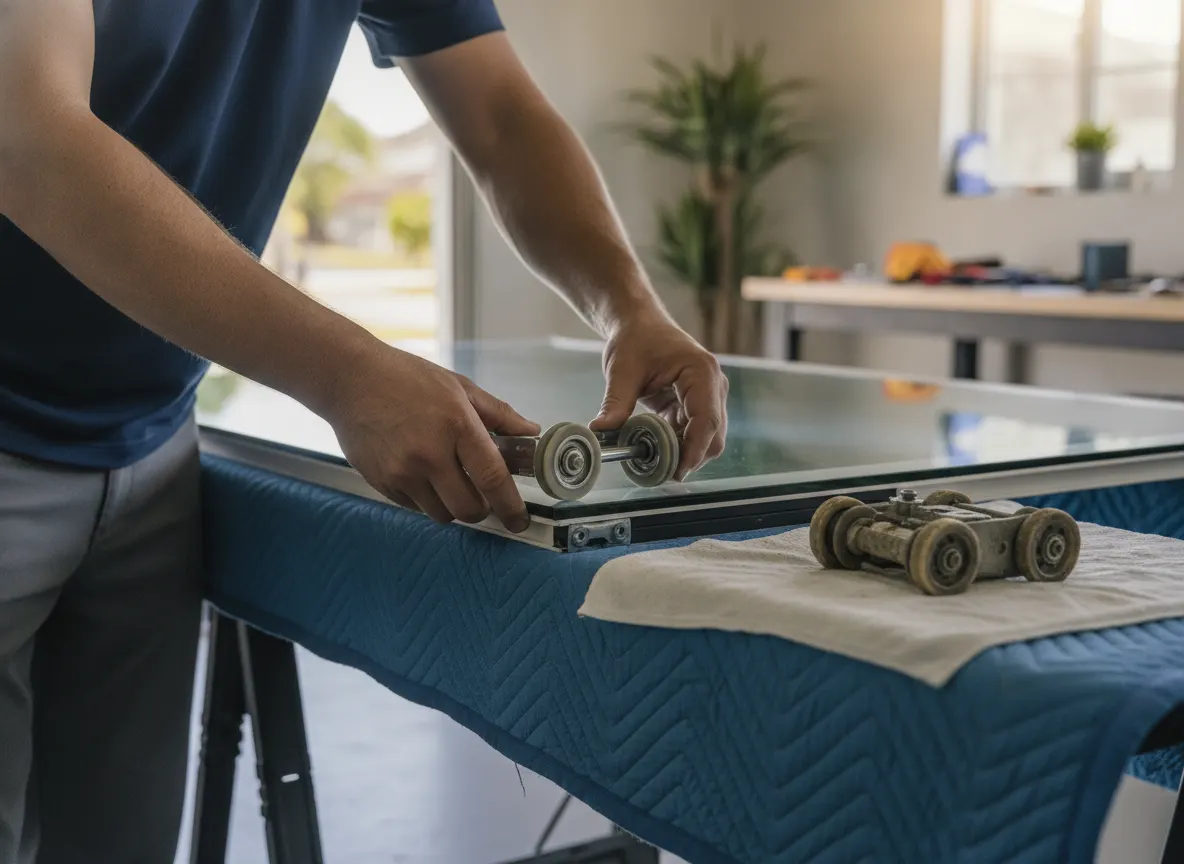
Under every sliding panel sit two small wheel assemblies carrying a door that can weigh two to three hundred pounds. When those rollers are healthy, all that glass floats. When the bearings corrode — and near the South Florida coast they always eventually do — the wheels stop turning and the door starts skidding on metal instead of rolling on it. That's the grinding you hear, and it gets worse fast, because a skidding roller chews into the track beneath it.
Roller replacement is the closest thing this trade has to a miracle cure. We remove the panel, extract the failed assemblies, and fit new rollers matched to your door's make and weight — specifying stainless-steel, sealed-bearing hardware built for salt air rather than the carbon-steel originals that failed. The difference is immediate: customers routinely can't believe it's the same door.
Signs your rollers have failed
- Grinding or rumbling noise as the door moves
- The door slides in jerks instead of one smooth motion
- A visible shiny or gouged wear line along the bottom track
- Metal shavings or rust-colored dust in the track
- The panel has dropped on one side and looks slightly tilted
- The door got heavy gradually over months — the classic bearing-failure pattern
What roller replacement includes
- Careful removal of the sliding panel — heavy glass handled with proper equipment
- Extraction of the old roller assemblies and inspection of the wheel housings
- New rollers matched to your specific door series and panel weight
- Stainless-steel, sealed-bearing hardware specified for coastal conditions
- Track inspection and cleaning while the panel is out — the smart time to do it
- Height and alignment adjustment, then a full glide-and-latch test