
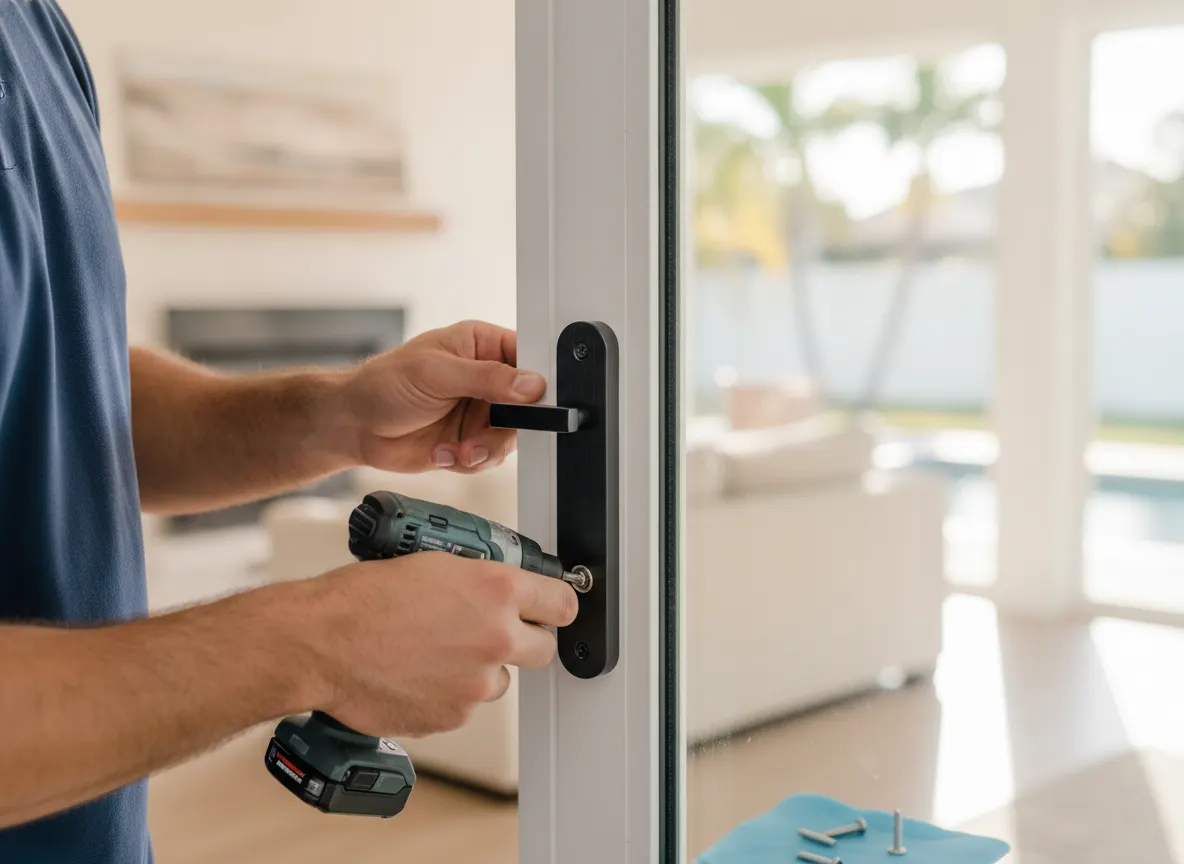
Handles are the one part of a sliding door you touch every single day, and in this climate they show it: pot-metal castings snap, plated finishes bubble and flake in the salt air, and sun-baked plastic pulls turn chalky and brittle. A broken handle can also strand the door — with some designs, once the handle snaps there's nothing left to grip a two-hundred-pound panel by.
Handle replacement sounds simple, and with the right part it is — but sliding-door handles are not one-size-fits-all. Hole spacing, stile thickness, latch integration and left/right orientation all vary by manufacturer and era. We identify your door series, bring hardware that actually fits, and install handle sets that pair correctly with your lock — from clean modern designs in corrosion-resistant finishes to like-for-like replacements on older doors where you want everything else untouched.
Time for a new handle when…
- The handle snapped off entirely — the classic pot-metal failure
- The finish is pitted, bubbled or flaking from salt exposure
- The handle wobbles because the mounting holes have worn oval
- The thumb latch or trigger sticks or no longer springs back
- Your door hardware looks decades older than the home around it
- You're replacing the lock anyway — the smart moment to upgrade the handle set
What handle replacement includes
- Identification of your door series and correct handle pattern before parts are ordered
- Interior/exterior handle sets fitted with correct spacing and orientation
- Integration with your existing mortise lock, or a matched lock-and-handle upgrade
- Corrosion-resistant finishes selected for coastal exposure
- Tightening and reinforcement of worn mounting points
- Operation test: grip, glide, latch and lock as one motion