
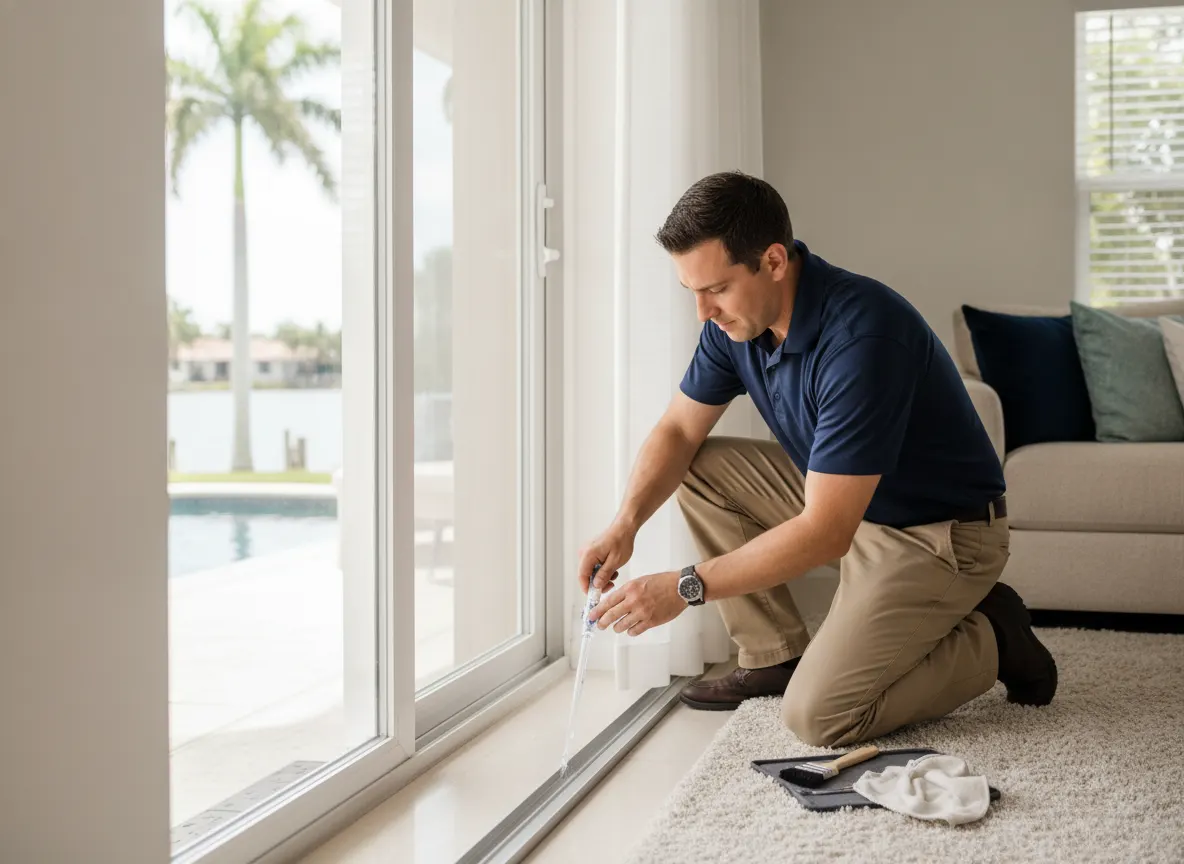
Every sliding door failure we repair — seized rollers, pitted tracks, latches that drift out of reach — starts as something small and silent. Sand sits in the track and grinds. Salt film creeps into bearings. The panel settles a millimeter a year. By the time the door is hard to open, the wear is done. Maintenance is how you never get there.
A professional tune-up is more than the vacuum-and-WD-40 routine (in fact, please don't use WD-40 — it strips lubricant and attracts grit). We deep-clean the track, clear the weep holes so storm water drains, lubricate with dry silicone products that don't hold sand, adjust roller height and latch alignment, and inspect the wear parts so you hear about a $100 problem before it becomes a $1000 one. On the coast, where hardware ages several times faster than inland, an annual or twice-yearly tune-up is the cheapest insurance a glass wall can have.
A tune-up makes sense when…
- The door still works but has gradually gotten heavier to slide
- You're within a mile or two of the ocean or Intracoastal — accelerated wear territory
- It's been years since anyone looked at the rollers or track
- You just bought the home and don't know the doors' service history
- The house has multiple sliders and you'd rather maintain than replace
- Hurricane season is coming and you want every panel gliding and locking properly
What a tune-up includes
- Deep cleaning of tracks and removal of embedded sand and debris
- Weep-hole clearing for proper storm drainage
- Dry-silicone lubrication of track, rollers and latch — never grease or oil
- Roller-height and alignment adjustment before wear patterns set in
- Lock, latch and keeper alignment check
- Wear report on rollers, track and weatherstripping, with honest priorities